How JoJoschool cut video costs ~10× with Kinescope and stopped worrying about video infrastructure
Facing a 20× price hike from Vimeo, JoJoschool moved its entire video catalogue to Kinescope in under a week and now saves ~€10,000 a year, without pulling a single engineer off the product it's building for Dutch school students.
Lina D.
Head of Content
June 25, 2026
Contents
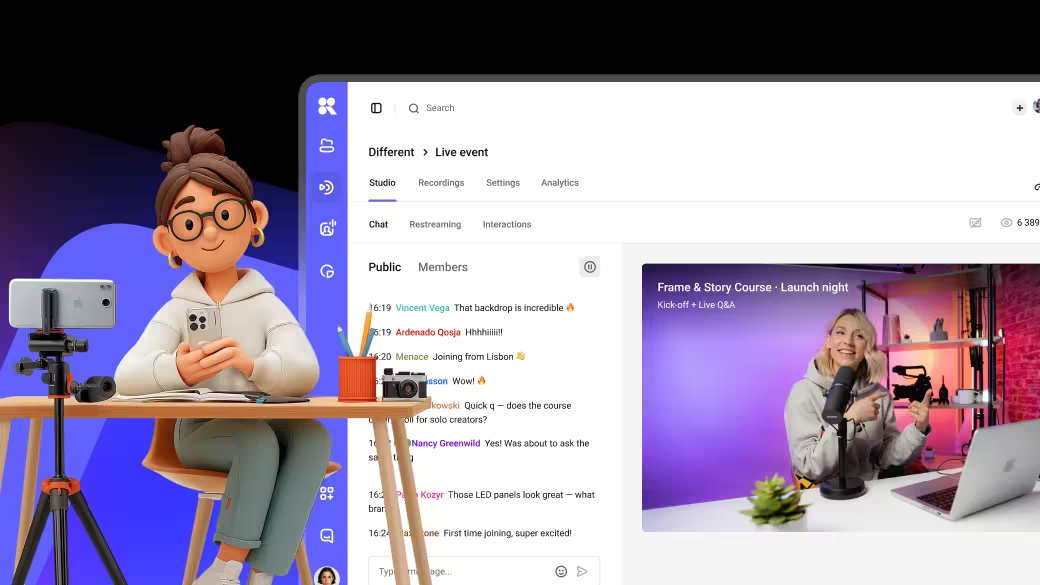
Live streaming without limits — private, powerful, reliable.
Keep your videos fast, clean, and private. Everything you need.
JoJoschool was founded about seven years ago by three co-founders, including Mathijs de Ruiter, who today leads product, branding, and (partly) marketing. Since then it has grown to more than 80,000 students. The platform helps them prepare for homework, tests, and final exams by tying every piece of content directly to the chapters and paragraphs of the textbooks Dutch schools use.
That work plays out against a backdrop the Dutch call vergrijzing — an ageing population. An older generation of teachers is retiring at scale, fewer young people want the job, and some subjects (German and French especially) are hard to staff at all. JoJoschool positions itself as extra support for students caught in that gap: recorded lessons, paragraph-level structure, exercises, and an in-house AI tutor called Ainstein that answers questions using the platform's own content and the actual books each class is taught from.
Ainstein in action
The difference shows up in a detail Mathijs likes to point out. Ask a physics question to a generic AI tool and then check a Dutch textbook, and you'll often get two different explanations. A student on JoJoschool studying paragraph 9.2 of their physics book instead sees the exact video lesson, exercises, vocabulary, summary, and FAQs for that paragraph, with Ainstein keeping its answers tied to the way the topic is taught in class.
JoJoschool sells on two fronts: to schools in bulk licences of 1,000–2,000 students at a time, and directly to students and families, where the consumer side is growing fastest. By the company's own data, 86% of students score higher and 83% say they learn faster after using the platform.
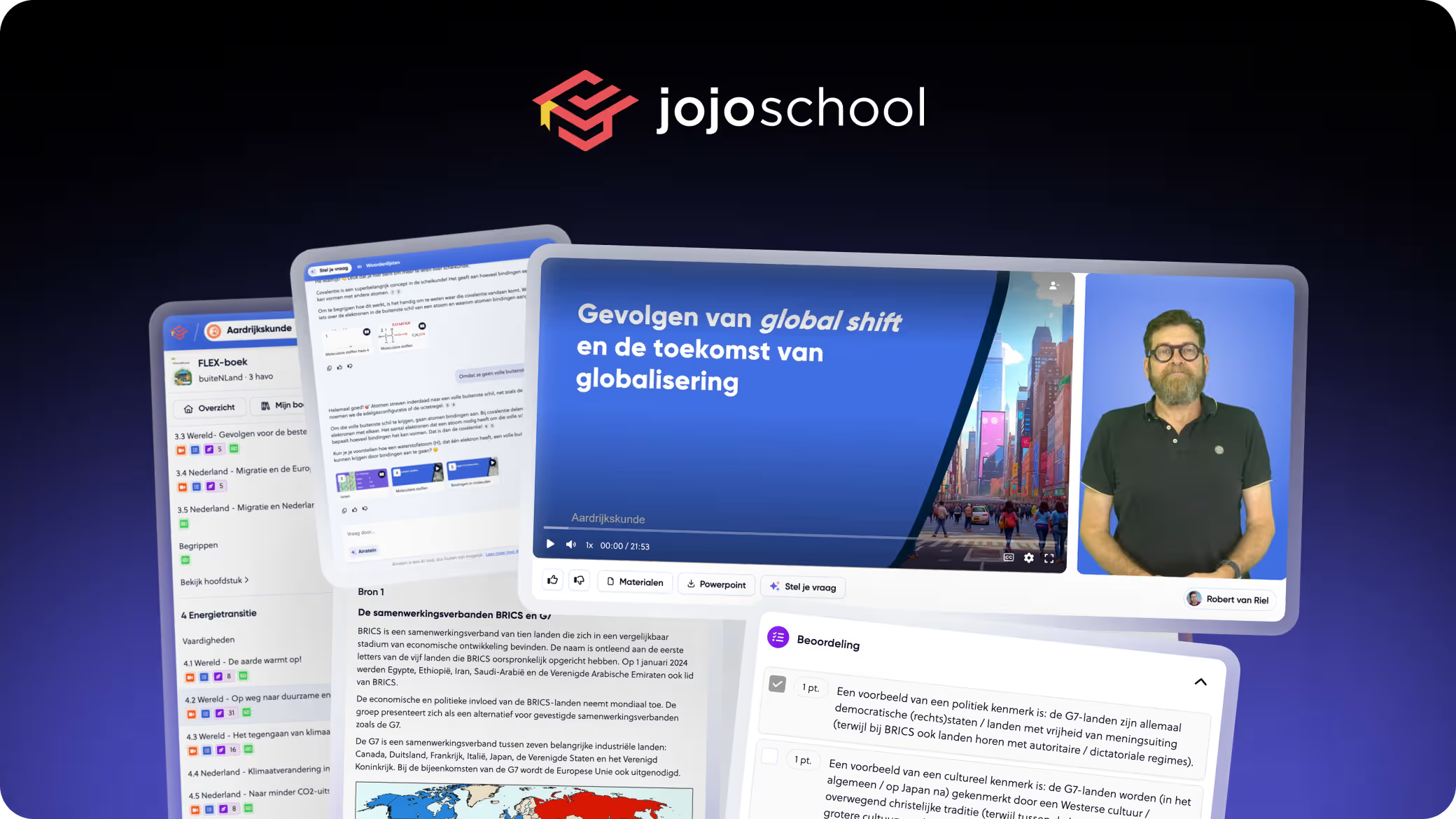
Video is one of the core pillars, and the team engineers it as carefully as the rest of the product. JoJoschool records every lesson in its own studio and plays it back through a player it built itself: a two-frame format with one feed of the teacher and one feed of the slides, side by side and synced in real time. Students who find the talking head distracting can hide it with a click and study from the slides alone.
About 75% of viewing happens on desktop, and JoJoschool is designed for that environment: serious sit-down sessions, away from phone notifications.
JoJoschool’s self-built two-frame player on top of Kinescope’s infrastructure
The challenge: Vimeo's pricing shock
For years, JoJoschool hosted its video catalogue on Vimeo's Business plan, a setup that cost the company around €50–60 per month and worked well enough at small scale. As the library grew toward thousands of lessons, Vimeo's account team told JoJoschool the plan was no longer appropriate and pushed for an upgrade that would have cost roughly 20× more.
There was also a second, quieter problem: Vimeo had been going down on JoJoschool a few times a year. Not catastrophic, but enough that the team had to keep an eye on it.
Suddenly they said, "You're using too much bandwidth, you have to pay twenty times as much." We were like — what is this?
So Mathijs started evaluating alternatives against a short list of must-haves:
Cost. Predictable, usage-based pricing that wouldn't punish growth.
Security and data residency. Keeping student data inside the EU, ideally The Netherlands.
A real human on the other end (less of a spec and more of a feeling): someone the team could actually reach when something needs to move.
Why Kinescope
We had first reached out to Mathijs about a year before the Vimeo price hike made the decision for him. When he went back to compare options properly, Kinescope checked every box:
Price. After JoJoschool's developers vetted each shortlisted provider's docs for technical fit, the team modeled real cost against JoJoschool's actual usage. On those projections Kinescope landed 5–10× below what Vimeo was asking, the lowest of everyone on the list.
A Dutch company. "We try to work with local companies as much as we can," Mathijs says. "Derren [Kinescope's Managing Director] is from Emmen, a really small city in The Netherlands where my father's family grew up. So I was like, this is a match."
EU data residency. Student data stays in Europe rather than the US, which matters for privacy and for the schools JoJoschool sells to.
Security features included.DRM and the protections JoJoschool needed weren't paid add-ons: "All the security measures we wanted to implement, we could implement, without paying any extra."
Developer-friendly. The documentation was in order, so building on the API was straightforward.
A one-week migration
What surprised the team was the speed of the migration process:
I told Derren, can you fix this? Two or three days later, everything was transferred. It took us two days to implement Kinescope and test it. The whole thing was done within a week.
Now JoJoschool runs almost everything through the Kinescope API, and that's the part the team values most: Kinescope handles the infrastructure (storage, delivery, DRM) while JoJoschool keeps the pieces it wants to own.
The two-camera player is a good example. The team rates Kinescope's player highly (Mathijs calls it one that "works incredibly well"), but they needed something niche it doesn't cover, so the two frames are simply two separate Kinescope videos, with JoJoschool's own synchronization layer and player built on top.
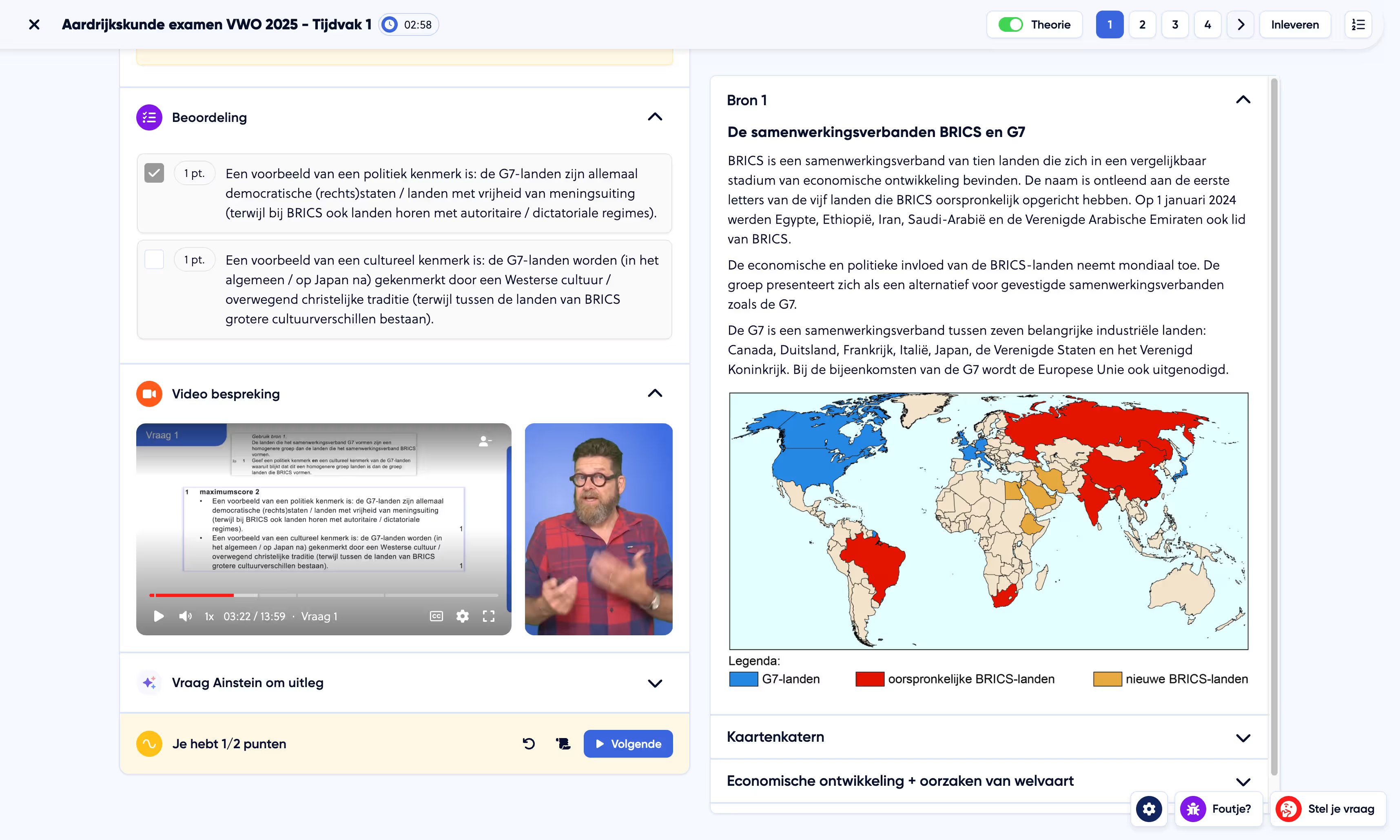
Exam mode with tips and integrated video module
The team also built an in-house video editor in the admin panel that auto-publishes ready-made lessons straight to Kinescope. Marketing is the deliberate exception: there, JoJoschool uses Kinescope's embed player because it's simpler.
The results
The clearest change is the bill. Set recent Kinescope invoices against what Vimeo was charging, and what it wanted to charge next, and JoJoschool saves at least €10,000 a year, a cost roughly 10× lower than Vimeo's quote.
Ask Mathijs what changed day to day, though, and he reaches for stability before the savings:
When we were working with Vimeo, we ran into quite a lot of downtime, at least a couple of times per year. Now I really can't remember the last time we ran into something like that.
Growth stopped being a billing problem, too. JoJoschool hosts roughly 1,000+ hours of content across 4,000 topics and 19 subjects. On the old plan, that level of JoJoschool usage would have triggered another forced upgrade.
What Mathijs values most is harder to put in a number:
I can email Derren and he will respond. I can't email a director at Vimeo and get a reply. The personal side is really important to highlight.
These days Mathijs opens the Kinescope dashboard maybe once a year. Everything runs through the API, so the team's attention stays on Ainstein, the content, and the adaptive lesson plans it's building.
What's next
JoJoschool is rolling out an adaptive learning experience that stitches together the most relevant segments of multiple video lessons into a personalized plan, calibrated to each student's upcoming test date and current level. The platform's AI tutor, Ainstein, already references video transcripts and keeps its answers tied to the lessons students are watching. The team plans to deepen this over the coming months.
Ainstein is ready to help with any question — there are no stupid ones
For Mathijs, the criteria haven't changed since the migration, and they look obvious in hindsight: a predictable bill, a platform that stays up, and a vendor that always stays in touch.
We have no plans on moving. It just works really well.
Build a product like JoJoschool. We'll handle the video.
Kinescope handles the streaming, storage, security, and scale. Tell us your video volume, and we'll run the math on your numbers.





.avif)



.avif)